October 1, 2026 — Will Chicago homebuyers and families seeking to refinance ever see mortgage rates in the 5% range again? Only a crystal ball can say.
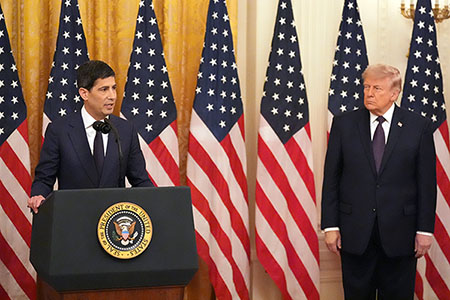
However, the political honeymoon is already over between Federal Reserve Chairman Kevin Warsh and President Donald Trump. On September 4, Trump urged the central bank and Warsh to “get smart” and aggressively cut rates.
With Trump emerging as the Fed’s chief critic, prospective Chicago buyers face mounting economic crosscurrents this autumn:
- Trump demanded the Fed slash borrowing costs, threatening to sever trade ties with foreign nations running trade surpluses with the U.S. if rates stay high.
- In the Oval Office, Trump doubled down, insisting: “We should be paying the lowest interest rate in the world.”
- Trump argued that a stronger-than-expected August jobs report—showing 162,000 jobs added nationwide—proves the economy warrants immediate rate relief.
The Fed declined to comment on the president’s statements.
Canada in Trump’s crosshairs
Singling out Canada amid an ongoing trade and tariff dispute, Trump framed his ultimatum as economic brinkmanship: “If we were playing hardball, all we’d do is say we’re going to do no trading with Canada. If we did no trading with Canada, we’d save $90 billion,” Trump claimed. “Each percentage point in interest that we pay in this country costs us $650 billion. We should be at 1% or a half of 1%. We shouldn’t be at 4%.”
The remarks came just two months before midterm elections, where voter frustration over persistent inflation remains front and center.
“Each percentage point in interest that we pay in this country costs us $650 billion. We should be at 1% or a half of 1%. We shouldn’t be at 4%.”—President Donald Trump
Yet Fed Chair Warsh struck an entirely different chord just days earlier, signaling that rate hikes could return to the table if inflation continues to heat up. Fueling that price surge is the ongoing conflict with Iran, which has driven retail gasoline up 44% since late February to over $5 a gallon, while diesel jumped 24% to top $6 a gallon.
Sounding much like his predecessor Jerome Powell, Warsh reaffirmed his commitment to returning inflation to the Fed’s 2% benchmark. “Short-term interest rates are the predominant tool to achieve the dual mandate,” he said. August inflation registered at 5.4%, up from 4.8% in July.
Economists also push back on Trump’s trade rationale. Trade deficits occur naturally when strong consumer purchasing power pulls in foreign goods. Furthermore, surplus nations routinely reinvest their U.S. dollars into domestic Treasurys—helping fund federal debt and circulating capital back into the American financial system.
Home-loan rate creep continues
On October 1, the Freddie Mac Primary Mortgage Market Survey reported that benchmark 30-year fixed-rate home loans rose to an average of 7.28% from 7.03% a week earlier. A year ago, the key 30-year rate averaged 6.34%. Fifteen-year fixed loans averaged 6.60% on October 1, up from a week earlier when it averaged 6.42%. A year ago, the 15-year fixed mortgage averaged 5.55%.
The Freddie Mac survey reflects conventional, conforming home purchase loans for prime borrowers with 20% down payments.
North Side sales stall under supply squeeze
Macroeconomic pressure is colliding head-on with a severe local inventory drought. In August, North Side Chicago home sales fell 14% while new residential listings plunged 18.4%, according to the September Chicago North Side Market Report.
Because inventory remains severely constrained, sellers retain pricing leverage. Median sales prices rose across the Near North/Gold Coast, Lincoln Park, and Lakeview neighborhoods, pushing North Side median prices up 10.9% year to date.