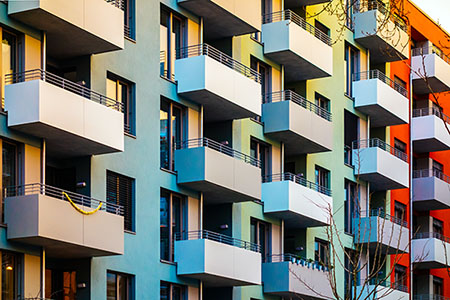
(Above) El Cubo (The Cube), a glass-and-steel structure in Malaga, Spain, housing about 70 artworks, including those by Marc Chagall, Frida Kahlo, and Pablo Picasso. It was designed by the Spanish architecture firm L35. (Click on images to view larger versions.)
August 1, 2023 – At the Museo Casa Natal Picasso in Málaga, birthplace of the widely celebrated and often controversial Pablo Picasso, I was told the artist’s first spoken word was Spanish for “pencil.”
It’s a satisfying story that may or may not be true, but one recited across Picasso hagiographies.
What is true is Picasso holds the title of world’s most prolific professional artist, with an oeuvre of more than 150,000 paintings, prints, engravings, illustrations, sculptures, and ceramics. He created so many works that he gave away museums’ worth, literally, making the pencil story all the more prescient.

|
(Left) Pablo Picasso, La Siesta, 1932. Fundación Almine y Bernard Ruiz-Picasso para el Arte. Préstamo temporal en el Museo Picasso. Málaga © edwardquinn.com. © Sucesión Pablo Picasso, VEGAP, Madrid, 2023. |
Pablo Picasso was born in Málaga, a seaport city on the sunny southern coast of Spain, in 1881. Although he lived in France his entire adult life, he always claimed Spanish heritage.
|
Likewise, Spain is happy to claim its native son. He died in 1973, marking this year the 50th anniversary of his death. Dozens of cultural institutions in Europe and North America are hosting special exhibitions and events to commemorate his art and legacy under the umbrella Picasso Celebration: 1973-2023. (Right) Portrait of Pablo Picasso, óleo sobre lienzo. © Sucesión Pablo Picasso, VEGAP, Madrid, 2023. |

|
I traveled to Spain to experience Picasso’s hometown, to learn about his life and relationships, and, most of all, to view troves of his art.
In Málaga, two very different museums are dedicated to the artist.
Museo Casa Natal Picasso, on the jacaranda-lined Plaza de la Merced, is the former apartment building where he was born and where he lived with his family until age nine. Exhibitions and galleries showcase early drawings, family mementos, and significant motifs such as doves and bullfights. One room is appointed as living and dining areas such as they might have appeared during the time the family lived here. On the plaza is a bronze sculpture of a seated Picasso on a bench. Join him there and post your selfie on the ‘gram.

|
(Left) Museo Casa Natal Picasso (Picasso Birthplace Museum) in Malaga. |
Picasso yearned for a museum in Málaga, but refused to participate while Francisco Franco was in power. Alas, the authoritarian dictator outlasted him by two years. Museo Picasso Málaga finally opened in 2003 with generous donations from the Picasso estate. The museum displays about 300 works of various media and from all periods of his expression. He may be most famous for his outrageous forays into cubism and abstraction, but here we also see his romantic leanings into realism and impressionism before he moved on to the avant-garde.
Anchoring my stay at the boutique hotel Molina Lario, I was footsteps from the fashionable Calle Larios boulevard; the magnificent but incomplete Holy Cathedral Basilica of the Incarnation 500 years after construction began; ancient Roman and Islamic ruins; hammam baths; outdoor eateries specializing in tapas; city park with towering palm trees; Malagueta beach; and a humongous multi-level Zara apparel store. On the eighth level of the hotel, named The Top, are a swimming pool, cocktail bar and aerial views of the park, harbor and cathedral.
|
(Right) Calle Marqués de Larios, also known as Calle Larios, a pedestrian and shopping street in Malaga inaugurated in 1891. |

|
Another fabulous observation point is the Parador de Malága Gibralfaro, a charming 38-room hotel with a white tablecloth restaurant, high on the mountainside. Do make a reservation for lunch if you can’t book an overnight stay.
On the waterfront is a modern promenade lined with palm trees, restaurants, boutiques, and street performers. I bought from a sidewalk artist named Oleg a small painting of sardines on a spear, a reference to the espetos or skewers of fish commonly grilled on the beaches of the Costa del Sol.

|
It’s not a Picasso, but I paid $25 cash and carried it home safely in my carryon. (Left) Muelle Dos Pier in Malaga. |
At the crux of the V-shaped harbor is Centre Pompidou Málaga, a blocky edifice with a facade of transparent and primary bright panels. It’s the first outpost of The Centre Pompidou in Paris and nicknamed “El Cubo.” I couldn’t help but think how fitting it is for the venerable institution of modern art to make its initial outreach into the city where Picasso made his first drawings. Within the museum’s holdings are works by such greats as Marc Chagall, Frida Kahlo, and, of course, Pablo Picasso.
After a few days in Málaga, I headed north on the high-speed Renfe AVE train to broaden my Picasso connections.
Museu Picasso de Barcelona. The artist lived his teenage years in the Catalonia capital and staged his first exhibition there before moving to Paris, as did many creatives of the time. Museo Picasso holds a collection of more than 4,000 pieces, many of which were donated by him or his widow, Jacqueline. Most prominent is the 44-painting series, “Las Meninas,” his Cubist interpretations of the royal court portrayal by the same name by Spanish Baroque painter Diego Velázquez in 1656. “Las Meninas” translates to “ladies in waiting.”
Museo Picasso – Colección Eugenio Arias. In the hamlet of Buitrago del Lozoya, a day trip 50 miles north of Madrid, lies a small but extraordinary museum. The artist developed a deep friendship with his long-time barber, Eugenio Arias, a fellow Spaniard also self-exiled in France. Over the decades, he gifted Arias with numerous prints, drawings, ceramics, inscribed books, and decorated barbering tools. Seventy or so of these works are presented as the Museo Picasso – Eugenio Arias Collection in the barber’s hometown. The museum is currently housed in the basement of the town hall but will be moving into a nearby historic mansion under renovation.
|
(Right) Artwork on display at the Museo Picasso – Eugenio Arias Collection. |

|
Three world-class art museums make up Madrid’s “Golden Triangle of Art” on the western side of Parque del Retiro, or Retiro Park. (The new Hard Rock Hotel Madrid will keep you within walking distance of the trio.)
Museo Nacional del Prado focuses on European masters between the 16th and 19th centuries. Among them is the afore-mentioned Diego Velázquez’ “Las Meninas,” the driver for Picasso’s series by the same name in Barcelona.

|
Thyssen-Bornemisza Museo Nacional, which began as a private collection by an industrialist family, holds American and European paintings from the 14th to 20th centuries, including several Picassos. (Left) Thyssen-Bornemisza National Museum. |
Museo Nacional Centro de Arte Reina Sofia is renowned for its vast collection of 20th century modern and contemporary art. Here, perhaps Picasso’s best-known work, the mammoth black-and-white anti-war “Guernica,” consumes an entire gallery on its own. The artist made the painting in outraged response to the 1937 fascist-led bombing of the Spanish town by the same name.
|
During World War II, while France was occupied by Nazis, a German military officer interrogated Picasso about Guernica. “Did you do that?” he asked. “No, you did,” the artist replied. It’s a satisfying story that may or may not be true. I’d like it to be. (Right) The author with the artist, in bronze. |

|
Photos by Pamela Dittmer McKuen except where noted otherwise.