July 27, 2026 — Driven by nearly $700 million in real estate investment, stabilizing office vacancies, and a $395 million lift from arts and culture, the Loop’s economy gained momentum in the second quarter of 2026, according to a new report from the Chicago Loop Alliance (CLA).
The State of the Loop report says $673 million invested in new construction and adaptive reuse was bolstered by local buyers, who made up 18 percent of Chicago property acquisitions over the past year. Local activity included purchases at 133 and 227 South State Street and continued work on the Thompson Center redevelopment.
Commercial vacancies began to level off in Q2 after six years of increases, helped by multi-floor leases from Huntington Bank and the law firm Vedder Price. Office occupancy remained at 101 percent of 2024 levels, reflecting stable hybrid work patterns.
Residential conversions are also accelerating. Three buildings are under construction through the city-funded LaSalle Corridor Revitalization Initiative, and 19 privately funded conversions are planned—more than in the past two decades combined. Together, the projects represent $1.67 billion in investment and nearly 4,000 new residential units for the district.
Retail growth followed, with 19 restaurants opening in Q2 and 20 more expected by year-end.
Arts, culture, and weekend events generate $395 million
Arts and culture venues attracted nearly 1.5 million visitors in Q2, generating $395 million for the local economy—a 20 percent increase from Q2 2025. Key drivers included the Sueños Music Festival, Chicago Blues Festival, Daley Plaza Farmers Market, and summer programming in Millennium Park.
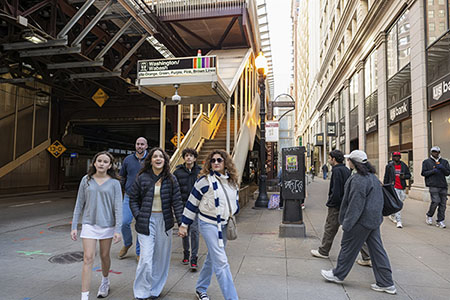
The surge in visitors lifted weekend foot traffic on State Street to 105 percent of pre-pandemic 2019 levels, while overall daily pedestrian traffic averaged 82 percent of 2019 levels.
Downtown transit networks also saw steady growth during the quarter. CTA weekday ridership averaged just under 1 million riders per day, or 111 percent of Q1 2025 levels, while Metra monthly ridership rose 9 percent to 300,000.
CTA also reported a 25 percent year-over-year decrease in crimes on transit property.