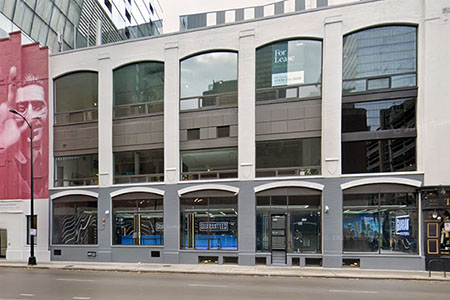
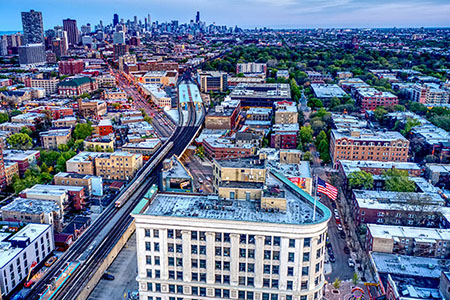
(Above) Chicago-based Marc Realty Capital has been trying to acquire the 448 condominium units at River City, located on the south branch of the Chicago River, but only about 58 percent of unit owners have voted to deconvert. Photo by Steven Dahlman.
Condo busted? Going rental? Here’s how to deconvert.July 20, 2016 – Condominium deconversion is growing in popularity to enhance the value of busted condominium projects. It is not unusual for condominium projects that entered the market in the bubble years immediately before the Great Recession to have ended up as a “busted condo” project. This is a term commonly used to describe condominium projects that failed when developers were unable to sell a substantial portion of the units.
In many cases this resulted in development loans going into default and foreclosure, with bulk purchasers acquiring the developer’s units and renting them out as individual rental units. Other times, the developers were able to modify their financing and continue to hold and rent the units themselves.
In either case, with residential apartment projects becoming a favored investment vehicle for some investors, finding a way to deconvert busted condo projects by terminating their status as “condominiums” and turning the whole project into a single-owner apartment project has come into favor. This often results in a substantial increase in value to investors.
Section 16 of the Illinois Condominium Property Act 765 ILCS 605/16 provides the mechanism for removing a condominium project from the provisions of the Act, a term colloquially referred to as condominium deconversion.
Fortunately, for bulk owners of a substantial percentage of condominium units, getting to 100 percent participation by all unit owners is not as difficult as it may at first seem. Instead of trying to convince 100 percent of all unit owners to go along, or trying to purchase units from hold-out unit owners who may demand a substantial premium over the objective fair market value of their unit, there is an alternative.
Bulk owners of a substantial percentage of units may chose, instead, to undertake a two-step process to enable condominium deconversion in a much more efficient way…
Step 1 – Acquire 75 percent of the units
The first step is to acquire a sufficient number of condominium units in the project to be able to implement the “forced sale” provisions of Section 15 of the Condominium Property Act. Unless the condominium declaration or bylaws require a greater percentage – which they seldom do in residential condominium projects – this means acquiring or gaining control of only 75 percent of the units. Since many bulk owners already own a substantial percentage of units, and sometimes have access to additional units at bargain prices through short-sale purchases or otherwise, getting to the 75 percent ownership threshold may not be an insurmountable challenge.
Once a bulk owner owns or controls 75 percent of the units – unless a greater number is required by the declaration or bylaws – the bulk owner can vote, at a meeting of unit owners called for such purpose, to sell the property as a whole. Pursuant to Section 15, such action is binding on all unit owners, and it is thereafter the duty of all unit owners to execute and deliver such instruments and to perform all acts necessary to effect the sale.

|
Provided that a unit owner that did not vote to approve the sale, he or she has the right, for 20 days, to file a written objection. If this occurs, the objecting unit owner is still obligated to execute all documents and take all actions to effect the sale, but will be entitled to receive an amount equivalent to the value of the unit owner’s interest as determined by fair appraisal, less any unpaid assessments or charges due from such unit owner.
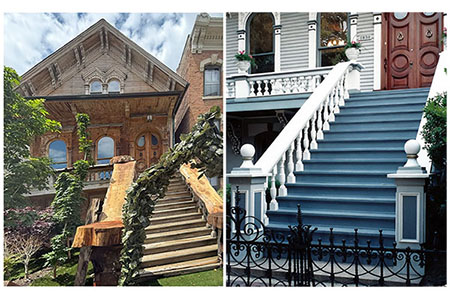
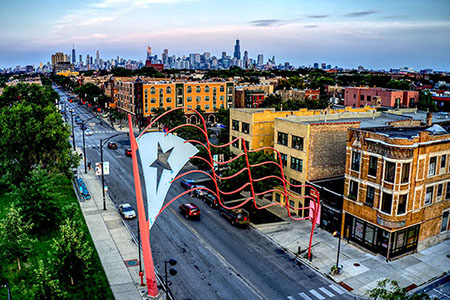
(Left) In Lincoln Park, 88 percent of owners in this 133-unit condo voted to deconvert. Clark Place Private Residences started as apartments, was converted to condos in 2005, and now Strategic Properties of North America will turn them back into rental units. |
Step 2 – Deconvert the condo
Upon satisfaction of the 75 percent threshold for approval to convey the entire property, and conveyance of the entire property to a single identified buyer, that buyer alone – provided it has the consent of all lienholders (which, in theory should be only the buyer’s mortgagee), has the power to elect to remove the property from the provisions of the Illinois Condominium Property Act pursuant to Section 16, a so-called condominium deconversion.
The forced sale provision in Section 15 of the Act establishes a mandatory legal duty for all unit owners to participate in the conveyance and to execute all instruments and take all actions to accomplish the conveyance. Still, it may be reasonable to expect that some unit owners may resist – particularly if the unit is their home, and/or if the mortgage indebtedness encumbering the unit exceeds the fair market value of the unit. In light of this practical risk, when proceeding with a condominium deconversion through forced sale, it makes sense to budget for litigation expenses, and – though not legally required – to establish a reserve to fund settlement buyouts when doing so makes practical business sense.
Condominium deconversion and sale is growing in popularity as a substantial value-added proposition for many busted condominium projects. It can be tricky at times, but in the right circumstance, sophisticated investors are finding the financial rewards worth the added effort.