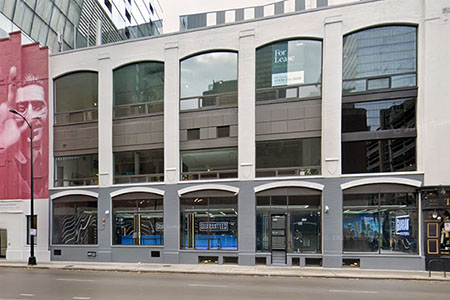
July 13, 2026 — The ambitious casino deal brokered by former Chicago Mayor Lori Lightfoot was once hailed as a jackpot for the city. Now, the harsh fiscal reality of that contract has washed ashore like a dead alewife at Bally’s casino on the banks of the Chicago River at Halsted Street and Chicago Avenue.
Some five years ago, Chicago entered into a so-called “Host Community Agreement” (HCA) with the gaming company Bally’s, the city’s choice as the operator of the first Chicago casino.
In that 214-page agreement, brokered by the Lightfoot administration for better or worse, Soo Kim, chairman of Bally’s Corporation, made a whole variety of commitments, including how many Chicagoans it would hire and their union status, the level and scope of the amenities in the casino, and a bevy of other conditions—unprecedented for a private business in the city, gaming experts say.
The city also demanded payments: $40 million on the signing of the agreement and then an additional $4 million a year in “direct” and “indirect” impact fees.
In return, the city gave Bally’s a monopoly on slot machines, also known as video gaming terminals (VGTs), within city limits. The agreement explicitly specifies that if the city were later to allow VGTs, and Bally’s showed a negative impact on its operations, then the direct and indirect impact fees (that $4 million) “shall be subject to good-faith renegotiation.”
Bally’s vs. Video Gaming Terminals
First legalized in 2009, video gaming terminals started operating in Illinois in 2012. The state is now home to the largest regulated video gaming network in the world, with a whopping 49,000 of the machines in operation, reports the Illinois Gaming Board.
Last week, Bally’s representatives argued that the city’s legalizing of video gaming terminals breaches an agreement the casino reached with Chicago. Bally’s said Chicago would lose a $4 million community benefits payment from Bally’s if VGTs are allowed in the city.
“Had we known that within just a few years, this body would reverse course and allow an alternative form of gaming that breaches the agreement, we would never have agreed to the numerous commitments, all of which we’ve held up,” Jewett said.
Jewett warned that under the “worst-case scenario,” legalized terminals could result in the loss of more than a third of the 3,000 permanent jobs Bally’s plans to bring to the city. He also said that since the machines first became operational in 2012, Illinois casinos have suffered a 37% reduction in gaming revenue.
Now, Bally’s says it is considering taking legal action against the city. “We’ve made it very clear that we plan to use all legal weapons available,” Jewett said.
At last week’s Chicago City Council hearing, Steven Mahr, Mayor Johnson’s acting Chief Financial Officer, said the city’s contract with Bally’s will be “at risk” if video gambling terminals are legalized citywide.
Regardless of Bally’s potential for lost revenue, Mahr said the city would earn 4.5 times as much per dollar on casino slot machines as on the terminals, which are set to proliferate in bars and restaurants throughout Chicago thanks to the budget-enhancement deal.
That’s because the revenue from the casino is taxed by the city at a much higher rate (23.2%) compared with the VGTs (5.15%). So, that means the city would need roughly four times the revenue from the non-Bally’s slots to break even, never mind the loss of the discretionary payments.
Calling ‘hogwash’ on Bally’s claim
Pat Doerr, Managing Director at Hospitality Business Association of Chicago, called Bally’s claim that video gambling terminals would hurt the casino’s bottom line “hogwash” during last week’s meeting. He said casinos across Illinois are surrounded by businesses with such machines yet still stay afloat.
Inside advice from ‘Mr. Zak’
To gain clarity on this confusing situation, The Home Front reached out to our veteran gaming source—Mr. Zak, a professional gambler—who just happened to be sitting at a video poker machine and winning $400 at Wind Creek Southland Casino in south suburban East Hazel Crest.
“Today, at Wind Creek Casino, the payout is 98% on video poker and 90% on coin-slot machines,” he said. At that rate, Mr. Zak estimates he still loses “only $33 per hour” for “recreational” gaming.
“At its temporary Medina Temple Casino in River North, Bally’s also pays out 90% on slots, but in my estimation, its video poker payouts are short,” Mr. Zak said.
“I think what will happen is the City of Chicago will still put the gaming machines in local bars and restaurants, and Bally’s will eventually not pay the $4 million impact fee,” predicted Mr. Zak. “A lot of money will be spent on litigation, and, of course, the lawyers will win.”
The city always does what it wants to do, Mr. Zak noted. “Allowing VGTs in local bars and restaurants will increase the attendance at casinos, when gamblers realize it is a better deal,” he predicted.
Mr. Zak explained that the casino payouts typically are 90% on slot machines, and 98% on video poker. “At bars and restaurants, the video-poker payout will be lower—say 65% to 80%. The bar owners and operators will still make profits. Casinos will make more profits simply because they will have more patrons than bars and restaurants,” Mr. Zak said.
Our gaming source has never been a fan of Bally’s, although Mr. Zak resides on the Near North Side, less than two miles from Bally’s casino.
“The best logical startup casino site would have been at Lakeside Center [the original McCormick Place East].”—Mr. Zak, Professional Gambler
Traffic troubles ahead for River West
The recently topped-out casino is replacing the former Chicago Tribune printing plant on 30 acres at 777 West Chicago Avenue in the River West neighborhood. When open, the gambling facility is expected to further add to the traffic volume in the area.
This bustling intersection is boxed in by the Chicago River, vehicular bridges, and Metra railroad tracks—not an ideal site for a mega development. Traffic congestion also includes a steady flow of trucks from a cement plant on Goose Island.
In 2022, Bally predicted the casino would pump $200 million annually into city pension coffers. However, Bally is not contractually required by the city to actually deliver that amount.
Experts say the choice of the Bally site at the nearly impassable corner of Chicago Avenue and Halsted Street is likely the worst possible location for a successful, money-making casino.
“Bally’s bought the deal with a $40 million upfront bribe,” noted Mr. Zak. “The Chicago-and-Halsted site is the most horrendous place they could put it.”
Mr. Zak—and this writer—agree that the best logical startup casino site would have been at Lakeside Center—the original McCormick Place East—for what could have been an instant “pop-up” downtown casino that likely would have instantly raised millions in gaming tax dollars for the city.
The bottom line on the beef between Bally’s and the City of Chicago is whether legalizing video gambling machines citywide is worth blowing up the casino contract—sparking the litigation that surely would follow.
It’s all a crap shoot. Let’s roll the dice! And, whatever happened to Bally’s $40 million payment?